Your order is accepted
We will contact you from 11:00 to 20:00
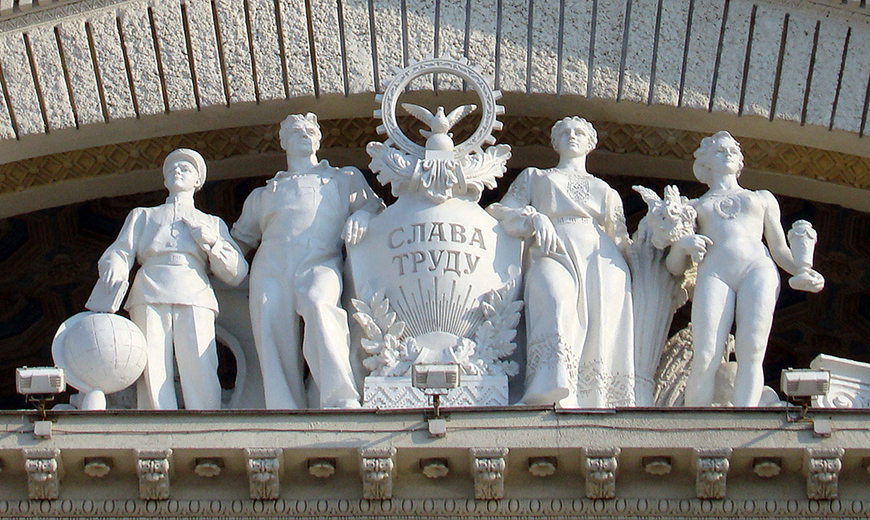
Trade Union Palace of Culture


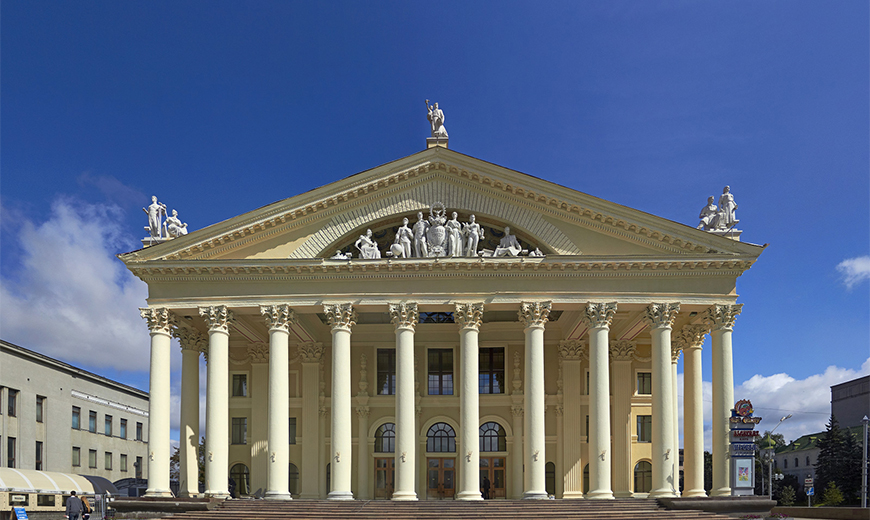
Nowadays, many associate the appearance of Nezavisimosti Avenue and Oktiabrskaya square with imposing Stalinist architecture. Not so many people know that just 200 years ago this area looked completely differently. For instance, in the 19th century the spot where Trade Union Palace of Culture stands today was occupied by a wooden church of St. George. By the beginning of the 20th century the church was replaced by a little wooden house once known as a store, and later as a printing house, and the railway management office. This part of town was very popular because of the many stores and entertainment establishments. However, by the end of the 20th century this building was abandoned in a state of total despair.
After The Second World War a decision was made to use this spot for the construction of the new Trade Union Palace of Culture. An architect Vladimir Ershov was invited from Moscow to work on the new building. The grand opening of the palace happened in 1956. Its architecture resembles of Parthenon in Athens. The pediment and the roof are decorated with sculptures which symbolize the union between labor, science and art. If you pay a closer look to the sculptures you can spot interesting characters: a girl with a violin, a student with a globe, a laborer, a kolkhoz woman with a sheaf, an athlete with a trophy, an intellectual with blueprints. Some statues have real-life prototypes. For instance, the statue of the kolkhoz woman was based on the Belarusian diva – famous opera singer Larisa Alexandrovskaya.
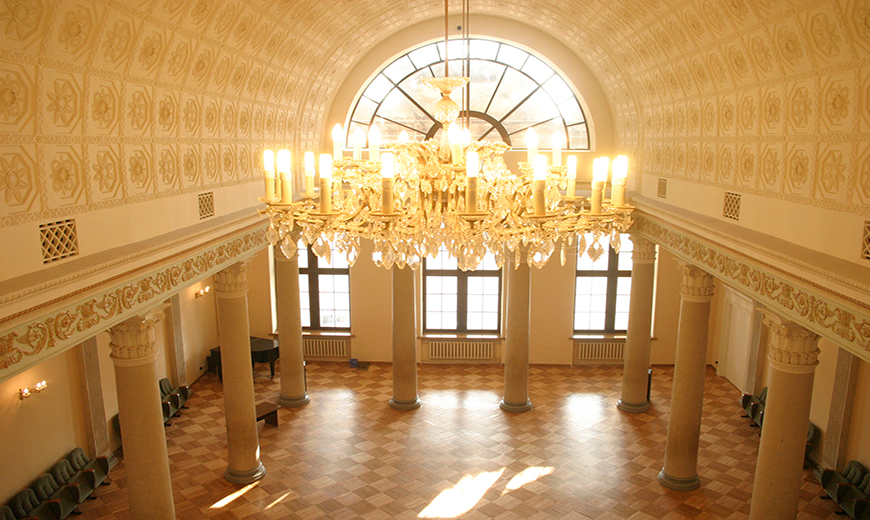
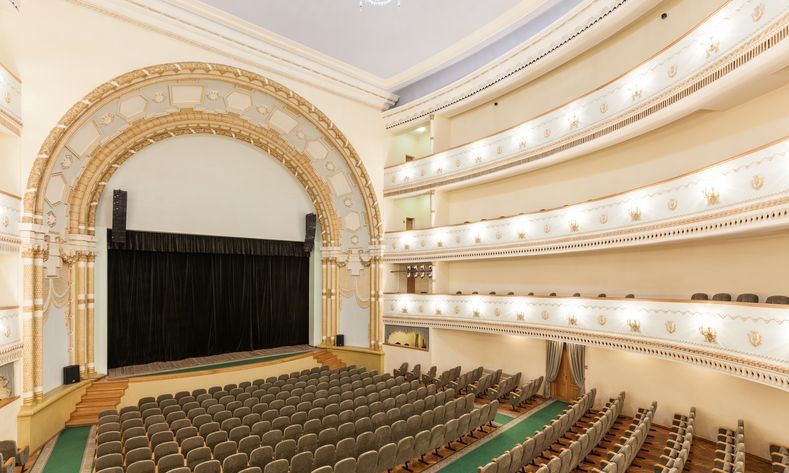
The interior decoration of Trade Union Palace of culture amazes its visitors no less than the facades; arches, columns, walls, decorated with intricate stucco all cause sincere admiration. The palace has several beautiful halls, but the main attraction is the Theater one, which was designed in the likeness of the hall in the Bolshoi Theater in Moscow. Nowadays the palace is the center of cultural and educational activities. Every year it hosts about 1000 events and visited by more than 300 000 people.